







The Role of Hormones and Enzymes in Abdominal Fat

The Role of Hormones and Enzymes in Abdominal Fat Distribution

The Role of Hormones and Enzymes in Abdominal Fat Distribution

Reducing abdominal fat, particularly visceral fat, offers a multitude of health benefits. By lowering blood pressure and blood sugar levels, individuals can significantly reduce their risk of developing type 2 diabetes and heart disease.

Visceral fat is the adipose tissue that envelops the abdominal region, and surrounding vital organs such as the liver, stomach, and intestines.

Although this fat serves a protective function for these organs, an excess accumulation in this area can elevate the risk of various health conditions.

  • Heightened blood pressure
  • Increased blood sugar levels
  • Increased risk of developing type 2 diabetes
  • Lower metabolic rate – This would hurt your ability for overall weight loss
  • Increased risk of heart disease
  • Impact your cortisol levels

Visceral fat

Losing this visceral fat will help prevent these types of health issues and help you get that flat belly. Working towards a weight loss goal that focuses on your waistline will help you build your abdominal muscles and prevent longer-term health issues.

After having a baby, one of the main things women tend to focus on is losing pregnancy weight from the stomach area.

All those months of stretching to make room for a baby often leave the tummy a lot softer than it was pre-baby, and conditions like ab separation can occur.

There are also hormones at play that can make the operation to shred belly fat quite tough.

The fat around your belly is known as visceral fat. It’s located around vital organs such as the liver, stomach, and intestines. This type of fat is used to protect these organs, but it can also influence hormones in your body and increase your heart disease and type 2 diabetes 

Lowering your waist circumference will help lower your blood sugar and your chances of developing type 2 diabetes. Working towards a weight loss goal that focuses on your waistline will not only help you build your core muscles but also prevent longer-term health issues.

How to burn body fat

Challenge yourself during workouts.

To burn off fat, you need to challenge your muscles during workouts. You won’t shift the fat if you don’t push yourself hard enough.

You don’t need to push yourself to the point of exhaustion, but you do need to push yourself hard enough so that you feel slightly sweaty and out of breath during your workout.

Make your workout tough, but not tough enough that you can’t do it, and give yourself enough time to recover between your workouts. If you do weight training every day, you could damage your muscles, so have a rest day in between each weight training session.

Work the larger muscle groups rather than isolated muscle groups.

Working out the larger muscle groups is way more efficient than working out isolated muscles – it burns off more calories, and therefore fat. It’s as simple as that – you can spend the same amount of time exercising.

Still, you can burn off many more calories if you work the larger muscle groups compared to the smaller ones. For example, a push-up is a great exercise that will work many of your upper body muscles, including the shoulders, chest, upper back, biceps, and triceps.

However, a bicep curl will only work the biceps. A push-up burns many more calories than a bicep curl, and it will burn off more fat. This is a similar idea to power walking versus regular walking – power walking helps you burn off more calories, which means that it

Work out your larger muscle groups to burn fat more quickly and efficiently. But remember to work out the smaller muscle groups, too – work out all muscles equally and for a similar amount of time to properly balance your muscles. Balanced muscles mean less chance of injury.

Work your core.

A stronger core means that you’ll have better overall body strength and improved posture. Pilates and yoga exercises are great for working your core.

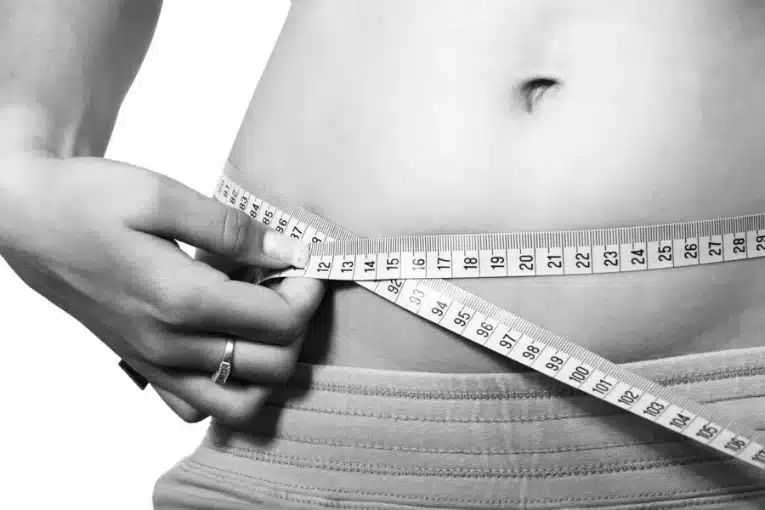
11 hormones and enzymes that impact belly fat.

Hormones are chemical messengers that perform certain functions in our bodies, such as regulating our weight.

Leptin, insulin, sex hormones, and growth hormones help influence our appetite, metabolism, and body fat distribution.

When there are excess fat cells, the signaling can become confused, overstimulated, and fatigued.

Researchers say that the visceral fat on our abdomens (belly fat) is the most dangerous due to the results of what the fat cells are now telling our bodies.

1. Leptin

Leptin controls our appetite by being released into the blood and telling our brain we are full.

People with higher-weight body/bodies have more leptin in their blood. Still, it appears as though their body ignores the message that they are full. So they continue to eat beyond their calorie intake requirements.

This is known as leptin resistance, and it’s unclear why this occurs. Leptin influences insulin, and an increase in leptin can also induce insulin resistance.

2. Adiponectin

In people with a healthy weight, adiponectin levels are quite high, but they drop dramatically in heavier people.

What adiponectin does in the body is important for weight control. It encourages the metabolism of fatty acids, lipids, and saccharides and prevents atherosclerosis from developing.

It also helps to control blood sugar levels and makes the body more sensitive to insulin. If you have smaller amounts of this released, then the metabolism of fats and sugars will be slowed.

3. Resistins

It is unclear what the exact role of resistins is, but scientists think that the more resistin you have, the more inflammation you will have, as it’s linked with inflammatory markers.

4. Oestrogen

Most of our bodies’ estrogen is produced in fat cells.

If we have excess fat cells, then we produce too much estrogen, leading to a condition known as estrogen dominance.

This is linked to conditions such as PCOS and obesity. Fat distribution linked with excess estrogen is accumulated around the belly- the ‘apple’ shape.

5. Aromatase

Aromatase is involved in sex hormone metabolism. It is an enzyme that helps convert testosterone to estrogen.

It can be found in many cells, not just fat cells, but having excessive fat cells stimulates more production.

6. Insulin

This hormone is produced in the pancreas, tells our body to absorb glucose, and helps metabolize fats and carbohydrates.

In heavier bodies, insulin signals get lost or ignored, known as insulin resistance, and our bodies do not absorb glucose as well as they should.

This is linked to metabolic syndrome and type II diabetes.

7. Ghrelin

Ghrelin is known as the hunger hormone. It’s released in the stomach and tells our body we are hungry.

There’s a greater amount of this hormone in our body before we eat, and the lowest after. It has more roles than that, though, and it also inhibits insulin secretion and decreases thermogenesis to regulate energy expenditure.

Unexpectedly, Ghrelin levels are normally lower in heavier people, and scientists think they are more sensitive to it.

8. Angiotensin

The angiotensin system possibly plays a role in body fat accumulation and is also involved in blood pressure control.

Angiotensin also stimulates the release of a steroid hormone called aldosterone from the adrenal cortex to promote sodium retention by the kidneys.

9. Lipoprotein Lipase

Lipoprotein lipase is found mainly on the surface of cells within muscles and in fatty tissue.

This enzyme plays an important role in breaking down fat in the form of triglycerides, which are carried from various organs to the blood.

10. Apolipoprotein

Apolipoprotein E is a protein that combines with fats (lipids) in the body to form molecules called lipoproteins.

Lipoproteins are responsible for carrying fats and cholesterol through the bloodstream.

11. Plasminogen activator inhibitor-1

Involved in blood clotting, which is one reason why heart disease and stroke are such high risks when heavier.

As you can see, being heavier triggers your hormones to support your being heavier by encouraging more fat cells!

The hormones that impact our appetite and fat metabolism act in reverse when we put on weight, leading us to higher risk factors for diseases like heart disease.

The good news, it is preventable and reversible through lifestyle and dietary management!

Kindly express your opinions within the comments section of this article or any other content available on our platform.

Related article: Belly fat, Everything You’ll Ever Need to Know, Including Tips. Continue reading >>

Explore our Healthy Lifestyle products and find your favorites today.

  • Have Questions? Read Our FAQs

This Post Has 4 Comments

  1. kaitiscotland

    Lack of oestrogen around the menopause also causes weight gain around the abdomen. You become more insulin resistant as a result.

    1. William

      Hello Kaiti Scotland,

      Thank you for your feedback on this topic; we appreciate the information that we gave on your blog.
      We truly appreciate your feedback.

    1. William

      Hi Linda XX,

      We appreciate your feedback on this article, and we are pleased to confirm that your observations are accurate.
      It is gratifying to learn that you found the content of this article to be enjoyable.
      Your input is greatly valued. Thank you.

We really appreciate your feedback. Thank you.

This site uses Akismet to reduce spam. Learn how your comment data is processed.