




Why Most Diets Fail (And How to Fix It)
We have all been there. You decide to get healthy, dramatically cut your food intake, and spend hours doing cardio. By Thursday, you are exhausted, starving, and ordering takeout.
The truth is that sustainable weight loss is not about starvation; it is about strategy. To lose body fat without losing your sanity, muscle mass, or energy, you need two things: a scientifically sound calorie deficit and an actionable food preparation plan.
This guide strips away the fitness industry myths. It gives you the exact blueprint for calculating your energy needs, fueling your body with the right macros, and prepping delicious meals that keep you full all week long.
So, let’s take a look at the ultimate guide to healthy calorie deficits.
Decoding the Math: BMR vs. TDEE
Before you change what you eat, you must understand how your body uses energy. Your daily metabolism is broken down into two core metrics.

Components of Total Daily Energy Expenditure (TDEE) – 30 Plus
BMR vs TDEE Explained: What the Difference Really Means | by
TOTAL DAILY ENERGY EXPENDITURE (TDEE) Ever wonder where
Basal Metabolic Rate (BMR)
Your BMR is the absolute minimum number of calories your body needs to stay alive at rest. Even if you lay in bed all day without moving, your body burns calories to pump blood, breathe, and repair cells. Never eat below your BMR, as doing so can trigger muscle loss and severe fatigue.
Total Daily Energy Expenditure (TDEE)
Your TDEE is the total number of calories you burn in 24 hours. It includes your BMR plus any energy used for walking, working, exercising, and digesting food. This is your true “maintenance” number.
Setting Your Safe Deficit
To lose weight safely, you must eat fewer calories than your TDEE, forcing your body to burn stored fat for fuel.
- The Sweet Spot: Subtract 500 to 600 calories from your daily TDEE.
- The Result: This creates a steady, healthy fat loss of roughly 1 to 2 pounds per week.
The Plug-and-Play Meal Prep Blueprint
The secret to staying in a calorie deficit is removing daily decision-making from the equation. When a healthy, pre-portioned meal is already waiting in your fridge, you are far less likely to grab fast food.
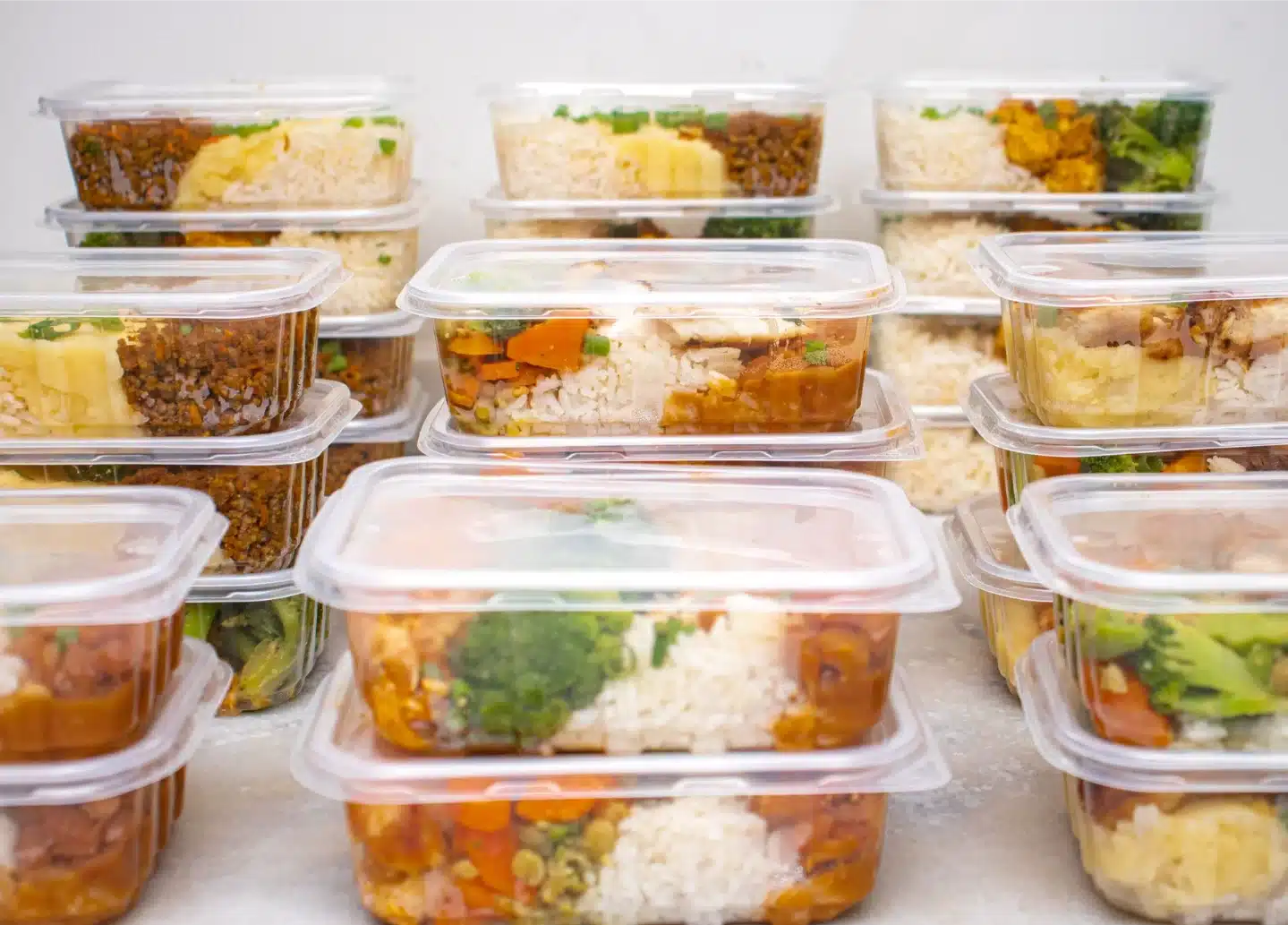
The Best Meal Prep Containers for Portion Control – Healthy Fresh
Salsa Chicken Meal Prep Bowls – Budget Bytes
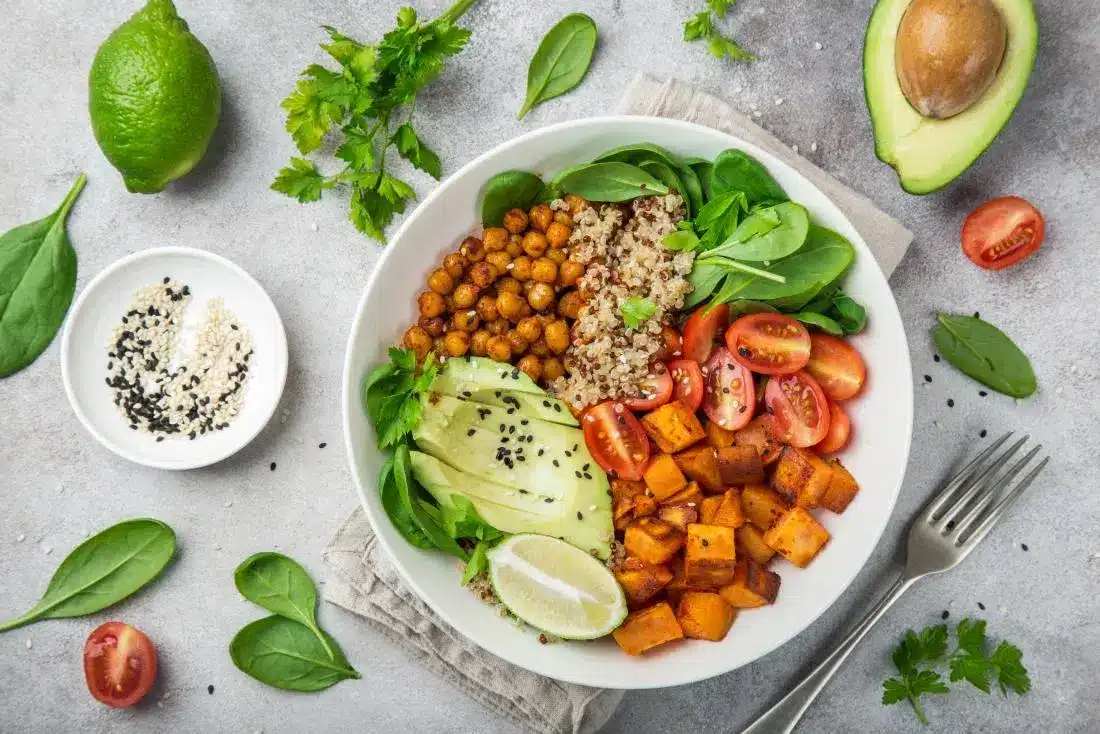
Sweet Potato Macro Bowl – The Plant Collective
The “Mix-and-Match” Batch Method
Do not cook individual recipes that take hours. Instead, cook massive batches of individual staple ingredients on Sunday or Wednesday, then assemble your containers:
- 1. Pick 2 Lean Proteins: Batch-bake chicken breast, lean ground turkey, or firm tofu.
- 2. Pick 2 Complex Carbs: Roast sweet potatoes or boil a large pot of quinoa or brown rice.
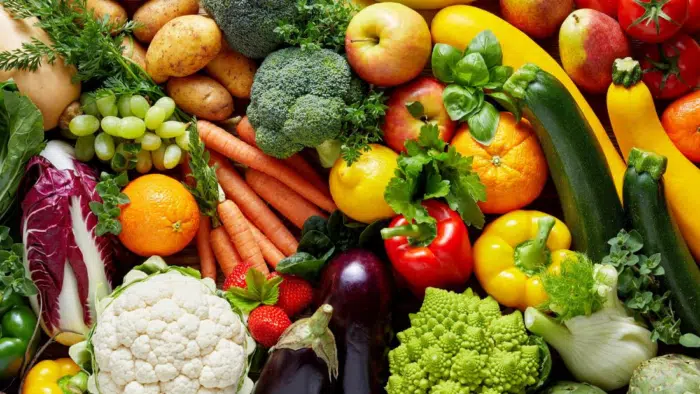
- 3. Pick 3 Voluminous Veggies: Steam broccoli, roast asparagus, or chop bell peppers.
The Perfect Deficit Container Formula
When packing your airtight meal containers, follow this visual portion rule to keep calories low but volume high:
- 50% of the container: Filled with non-starchy, fiber-rich vegetables to keep you physically full.
- 25% of the container: Filled with lean protein to protect your muscles and boost metabolism.
- 25% of the container: Filled with complex carbohydrates for sustained physical energy.
Tech on Your Side: Tracking Made Simple
Calculating your deficit is the first step, but tracking your intake ensures you stay on target. Humans are notoriously poor at estimating food portions, often underestimating daily intake by up to 30%. Using a digital tool eliminates the guesswork.
Top Tracking Apps
- MyFitnessPal: Offers the largest verified global food database and a barcode scanner for packaged foods.
- Cronometer: Excellent for tracking precise micronutrients (vitamins and minerals) alongside your calories.
- Lose It!: Features a highly intuitive, visually appealing user interface that is ideal for absolute beginners.
Best Practices for Tracking
- Weigh, Don’t Guess: Use a digital food scale to weigh your food in grams or ounces rather than relying on measuring cups or spoons.
- Track the Extras: Do not forget to log cooking oils, salad dressings, butter, and liquid creamers, as these can add hundreds of hidden calories.
- Log in Real-Time: Track your meals immediately after eating them so you do not forget the minor details later in the day.
The Deficit-Friendly Grocery Checklist
To make your grocery trip seamless, use this checklist of high-volume, nutrient-dense foods. Calorie numbers are provided to help you plan your container formulas.
🥩Lean Proteins (The Satiety Builders)
- Chicken Breast (Skinless): ~165 calories per 100g (cooked)
- Lean Ground Turkey (93/7): ~170 calories per 100g (cooked)
- White Fish (Cod, Tilapia): ~105 calories per 100g (cooked)
- Extra Firm Tofu: ~100 calories per 100g
- Egg Whites: ~50 calories per 100g
🥦Voluminous Veggies (The Plate Fillers)
- Broccoli: ~35 calories per 100g
- Zucchini / Zoodles: ~17 calories per 100g
- Spinach & Leafy Greens: ~23 calories per 100g
- Bell Peppers: ~20 calories per 100g
- Cauliflower (or Cauliflower Rice): ~25 calories per 100g
🍠Complex Carbohydrates (Sustained Energy)
- Sweet Potato: ~86 calories per 100g (raw)
- Brown Rice: ~110 calories per 100g (cooked)
- Quinoa: ~120 calories per 100g (cooked)
- Rolled Oats: ~380 calories per 100g (dry/raw)
Trusted Resources for Your Journey
For deeper scientific insights and personalized calculator tools, explore these highly vetted resources:
- TDEE Calculations: Use the Mayo Clinic Calorie Calculator to establish your personal metabolic baseline.
- Dietary Guidelines: Read the CDC Healthy Weight Guide to learn about the long-term health benefits of sustainable fat loss.
- Portion Control Science: Check out the Harvard T.H. Chan Healthy Eating Plate blueprint to visualize your nutritional balances perfectly.
Conclusion: Small Steps, Big Results
A healthy calorie deficit is not a punishment; it is a lifestyle adjustment that respects your biology. By combining simple metabolic math with practical, batch-cooked food prep, you remove temptation and set yourself up for predictable success.
Do not try to change everything overnight. Pick two proteins, two carbs, and three vegetables this week. Package them up, track your progress, and watch how quickly consistent habits turn into permanent results.
So, cheers to your success, the ultimate guide to healthy calorie deficits.
Kindly express your opinions within the comments section of this article or any other content available on our platform.
Please visit our tools page and “Try Our Free Health & Macro Calculators”
Explore our Healthy Lifestyle products and find your favorites today.
- Have Questions? Read Our FAQs