










Aging-research-discovery-that-changes-how-we-aged

Aging Research Breakthrough, Discover Changes How We Age

  • Post author:
  • Post category:Your Health
  • Reading time:8 mins read

For centuries, humans have sought ways to slow, delay, or even reverse the frailties associated with aging. Over the last decade, that search has shifted from philosophy and folklore into rigorous biology and clinical trials.

Today, researchers are converging on two complementary ideas that together represent a genuine Aging Research Breakthrough: (1) the targeted removal or modulation of senescent (“zombie”) cells that drive chronic inflammation and tissue decline, and (2) controlled cellular reprogramming that can reset age-related molecular marks inside cells.

Together, these approaches have changed not only how we think about aging, but how we might treat — and in some cases reverse — age-related decline. (Nature)


What the breakthrough actually is

Two major strands of modern geroscience are reshaping the field:

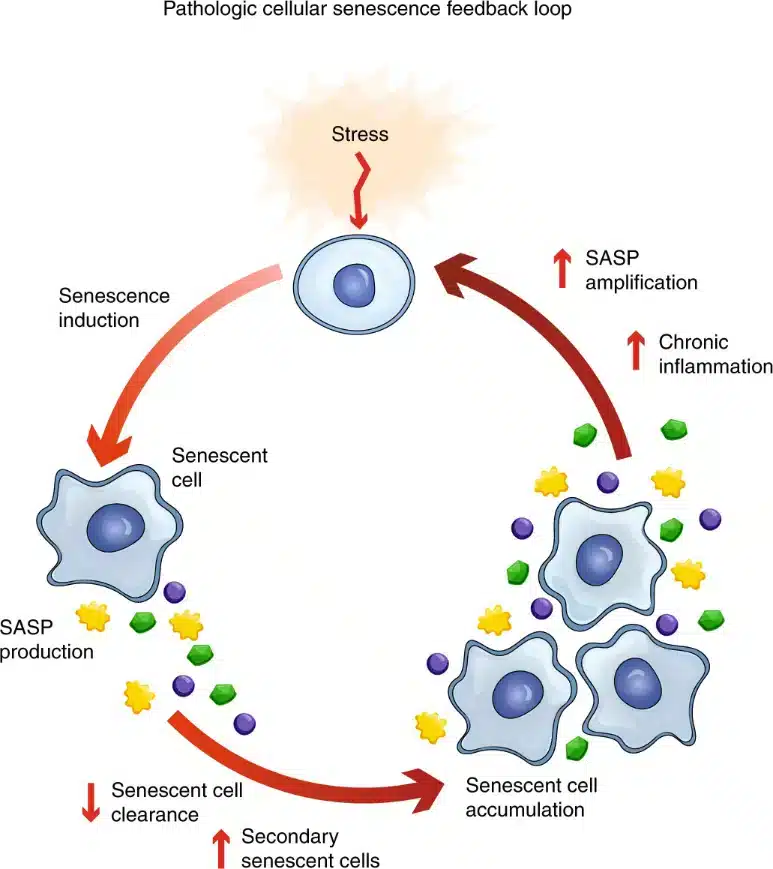
  1. Senolytics and senescence-targeting therapies. Senescent cells are damaged or stressed cells that stop dividing but refuse to die.

They secrete a cocktail of inflammatory factors (the SASP — senescence-associated secretory phenotype) that harm neighboring cells and promote tissue dysfunction.

Drugs called senolytics selectively kill senescent cells, while senomorphics reduce their harmful secretions.

Preclinical studies show that clearing senescent cells improves organ function and extends healthspan in mice; early human trials are underway for conditions ranging from frailty to chronic lung disease. (Nature)

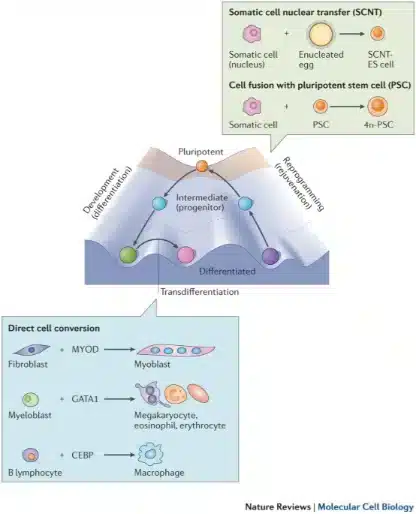
2. Partial cellular reprogramming. Inspired by the Yamanaka factors (a combination of transcription factors that can convert adult cells into induced pluripotent stem cells), scientists have discovered that short, controlled pulses of reprogramming factors can erase some molecular hallmarks of aging.

Resetting epigenetic age and improving tissue function — without turning cells fully pluripotent (which would risk tumors). In animals, carefully tuned partial reprogramming has restored youthful function in tissues ranging from retina to muscle.

This is a radical shift: instead of only preventing damage, it suggests we can reverse certain types of cellular aging. (Nature)

These strategies differ in mechanism but are complementary: senolytics remove harmful actors; reprogramming repairs the epigenetic program inside cells.

Why this matters — from molecules to medicine

Aging isn’t a single disease — it’s a constellation of processes (DNA damage, mitochondrial dysfunction, chronic inflammation, telomere attrition, altered proteostasis, etc.) that together increase the risk of heart disease, dementia, diabetes, cancer, and frailty.

Targeting the biology of aging — rather than each disease separately — could compress morbidity: people would remain healthy longer, with a shorter period of decline at the end of life.

  • Senescent cells accumulate across tissues with age and contribute directly to the inflammation and tissue breakdown seen in old animals and humans; their clearance in mice delays multiple age-related pathologies.

Clinical trials of senolytics (e.g., dasatinib + quercetin, fisetin, and other compounds) have begun, with early signals that certain physical and cognitive outcomes may improve. (The Lancet)

  • Partial reprogramming tackles epigenetic aging — the chemical marks on DNA and chromatin that control gene expression and which correlate strongly with biological age.

Early animal studies show rejuvenation of tissue function and some extension of healthy lifespan without overt tumor formation when reprogramming is carefully limited. If translatable and safe, this could allow restoration of function in tissues damaged by age or disease. (PubMed)


Recent high-impact results and clinical movement

Several notable milestones justify calling this an Aging Research Breakthrough:

  • Reviews and meta-analyses in 2024–2025 synthesize mounting evidence that senolytics and senescence-targeting strategies have translational potential, and they highlight several ongoing, early-phase human trials.

These reviews are elevating senescence from a laboratory curiosity to a bona fide therapeutic target. (Nature)

  • Pilot human studies and small open-label trials have tested senolytics for conditions such as idiopathic pulmonary fibrosis, osteoarthritis, cognitive decline, and health complications in childhood cancer survivors.

With some promising biomarker and functional signals that warrant larger randomized trials. (The Lancet)

  • Partial reprogramming has moved from mice to larger animal models and refined protocols. Labs are developing ways to use subsets of Yamanaka factors, deliver them transiently (e.g., with gene therapy vectors that can be switched on and off), and combine them with safety “brakes.”

These refinements reduce tumor risk while keeping rejuvenation benefits. Biotech companies are planning early clinical work for localized applications (for example, optic nerve injuries) where benefits can be measured, and safety can be tightly monitored. (PubMed)

  • Beyond single agents, combination approaches (for example, rapamycin together with other modulators) have shown big lifespan and healthspan effects in animal models.

A drug cocktail recently reported to increase mouse lifespan by ~30% and improve late-life health is an example of how combinations may be more powerful than monotherapies. (The Times of India)


Caveats and safety concerns

Hype is rising faster than data in some corners of this field, and there are important cautions:

  • Safety first. Senescent cells also have beneficial roles (wound healing, tumor suppression), so indiscriminate removal could cause harm. Clinical trials must establish not just efficacy but long-term safety. (Nature)
  • Tumor risk with reprogramming. Moving cells towards pluripotency can provoke uncontrolled cell growth. The entire promise of partial reprogramming depends on achieving a narrow therapeutic window that rejuvenates without de-differentiating cells into a cancer risk.

Ongoing research is focused on safer factor combinations, delivery systems, and treatment schedules. (Nature)

  • Complexity of human aging. Animal models simplify human biology; humans live longer, have more environmental exposures, and show greater heterogeneity.

Translating findings into human therapies will require large, long-term studies and robust biomarkers of “biological age.” (ScienceDirect)

Practical implications and what to expect next

What does this mean for patients, clinicians, and the public?

      • Near term (1–5 years): Expect more randomized clinical trials of senolytics for specific age-related conditions, improved biomarkers (blood-based epigenetic clocks, inflammatory panels), and cautious first-in-human studies of localized or short-term partial reprogramming strategies. (The Lancet)
      • Medium-term (5–10 years): If trials confirm safety and benefit, we could see approved indications for senolytic drugs (e.g., to treat fibrosis or frailty) and synthetic biology/gene therapy approaches that deliver controlled reprogramming in specific tissues.

Combination drug regimens that modulate multiple aging pathways (mTOR inhibitors such as rapamycin, senolytics, metabolic interventions) may emerge as standard geroprotective therapies. (The Times of India)

      • Long term (10+ years): With successful translation, we might shift medicine away from treating isolated age-related diseases toward preserving systemic resilience — compressing morbidity and increasing healthy lifespan.

This would have profound societal, ethical, and economic consequences requiring careful policy and equity planning. (ScienceDirect)


How researchers and the public can stay informed

This field moves fast. If you want reliable updates and primary sources, follow respected journals and organizations that publish peer-reviewed studies and reviews, such as Nature Aging.

The Lancet, PubMed Central reviews, and major geroscience centers (e.g., AFAR, NIH/NIA summaries). For deep dives on specific studies mentioned in this article, see the cited work below. (Nature)


Bottom line

Calling something an Aging Research Breakthrough is a serious claim. The convergence of senescence-targeting therapies and controlled cellular reprogramming is exactly that: a set of discoveries that change how scientists conceptualize and intervene in aging.

They shift the goal from merely treating age-related diseases to modifying the underlying biology that produces those diseases.

Cautious optimism is warranted: early animal and human studies are promising, major safety questions remain, and the next decade will be critical for proving whether these breakthroughs can safely deliver longer, healthier lives for people.


Selected reading & sources (picked for clarity and relevance)

        • Strategies for targeting senescent cells in human disease — Nature Aging.
        • Senolytics: from pharmacological inhibitors to clinical prospects — review. (Nature)
        • Gene therapy–mediated partial reprogramming extends lifespan in models — PubMed summary. (PubMed)
        • Pilot studies of senolytics affecting cognition and mobility — The Lancet / eBioMedicine. (The Lancet)
        • Inside the scientific quest to reverse human aging — Washington Post overview of translation and ethics. (The Washington Post)
        • Recent animal results on drug combinations that extend lifespan — reporting on Max Planck findings. (The Times of India)

🌍 What This Means for Humanity

These Aging Research Breakthroughs are not just scientific curiosities—they represent a paradigm shift in medicine and human health. If these discoveries translate successfully to humans, we could see:

  • Extended healthspan: Living longer without chronic disease.
  • Personalized anti-aging therapies: Tailored to genetic and metabolic profiles.
  • Reduced healthcare costs: By preventing rather than treating age-related diseases.

Kindly express your opinions within the comments section of this article or any other content available on our platform.

This article is updated regularly to align with evolving CDC and NIH standards. We welcome your contributions to help clarify and improve this content.

Related article: Life Expectancy, Why Is the US Lower Than Other Countries? Continue reading >>

Explore our Healthy Lifestyle products and find your favorites today.

  • Have Questions? Read Our FAQs

This Post Has 8 Comments

  1. nobartv

    Thank you for putting this in a way that anyone can understand.

    1. William

      Thank you for your feedback, and your continuous support.

      Thank you.

  2. jalalive apk

    The way you write feels personal and authentic.

    1. William

      Hello Jalalive

      We value your thoughts on this article, and we are happy to affirm that your insights are correct.
      Your feedback is highly appreciated. Thank you.

    1. William

      Hi Luisa,

      Thank you for your feedback, and your continuous support.

      Thank you.

  3. Priti

    Very interesting blog on ageing ! Thanks for sharing. Actually no one wants to get old quickly. Well shared thanks.

    1. William

      Your feedback is highly appreciated. Thank you.
      Also, remember age is just a number.

We really appreciate your feedback. Thank you.

This site uses Akismet to reduce spam. Learn how your comment data is processed.